Trust + responsibility
How Responsible Do We Actually Want AI to Be?
Personalisation becomes much more complicated when we ask what AI needs to know about us.
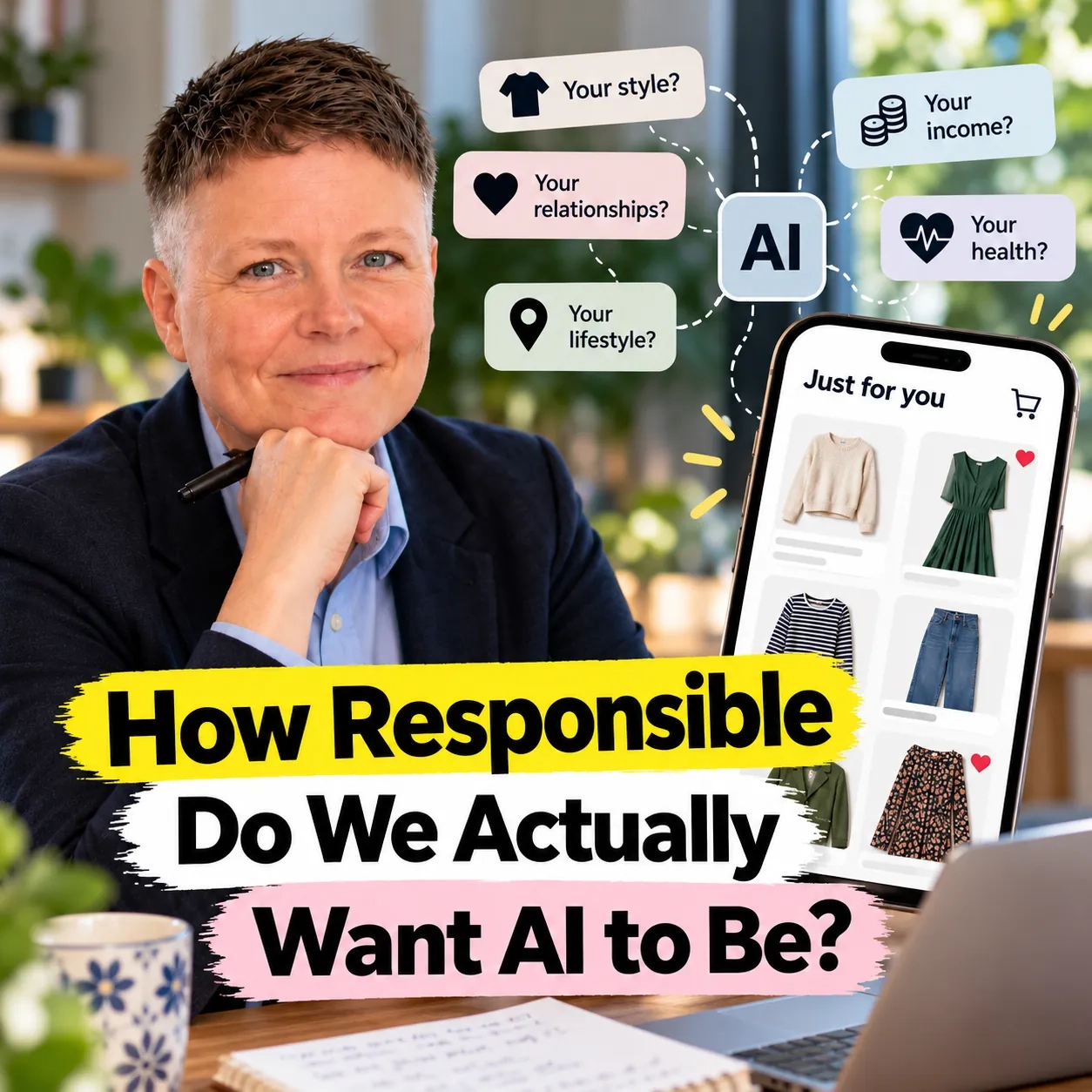
We want AI to understand us.
Until we start asking what that actually requires.
Imagine an AI system trying to personalise an experience for you.
Would it help if it knew your style?
Probably.
Your preferences?
Maybe.
Your income?
Your health?
Your relationships?
Your lifestyle?
Suddenly personalisation stops sounding like a simple product feature.
It becomes a question about boundaries.
The more an AI system knows about a person, the more intelligently it may appear able to respond.
But capability isn’t the only consideration.
We also need to ask:
Should the system know this?
Does it actually need this information?
What inference is being made?
What happens if the inference is wrong?
Could the information affect somebody in ways they never expected?
Does the person understand why they’re seeing this particular result?
This is where Responsible AI becomes tangible.
It isn’t simply a framework sitting beside the product.
It is present in everyday design decisions: what data we collect, what we infer, what we personalise, what we reveal, what we automate, and what we deliberately choose not to know.
There is a productive tension here.
We want AI to be useful.
We want it to understand context.
We want experiences to become easier and more relevant.
But we also want privacy, autonomy, fairness and human agency.
Responsible AI lives inside that tension.
The interesting question therefore isn’t:
How much can AI know about us?
It is:
How much should it need to know to genuinely help us?
- Responsible AI
- Personalisation
- Privacy
- Human Agency
- AI Ethics