Making AI
Product, technical and governance teams building or introducing AI.
AI adoption, AI enablement and human-centred AI transformation. Based in Berlin, working in English and German.
I'm Jenny Simonds-Spellmann. I work between the people building AI, the people expected to use it, and the people living with the results.
Organisations are introducing copilots, agents and automation. The technology can work and still fail, because people don't understand it, don't trust it, don't know when to use it, or don't know what their own role is once parts of their work are automated. My work sits in that gap.
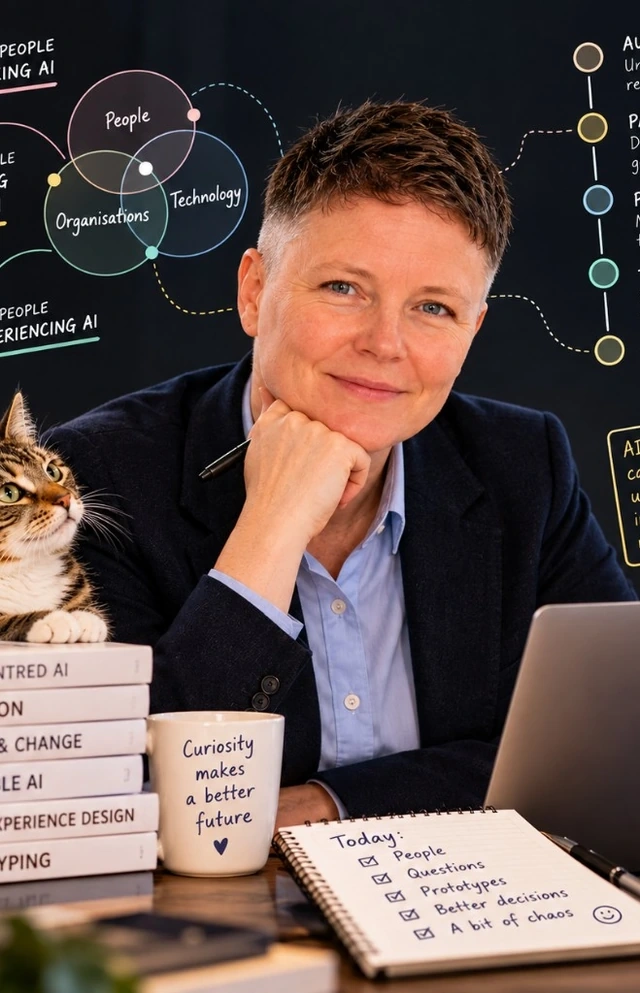
Where I work
Product, technical and governance teams building or introducing AI.
Employees, managers and teams expected to bring AI into their everyday work.
Customers, citizens and users of services that increasingly contain AI.
How I work
What this changes
Notes from the messy middle of AI transformation.
AI adoption rarely fails because someone forgot to make another slide deck. The interesting problems appear when technology meets real people, real work, existing organisations and human judgement. These are some of the questions I'm exploring.
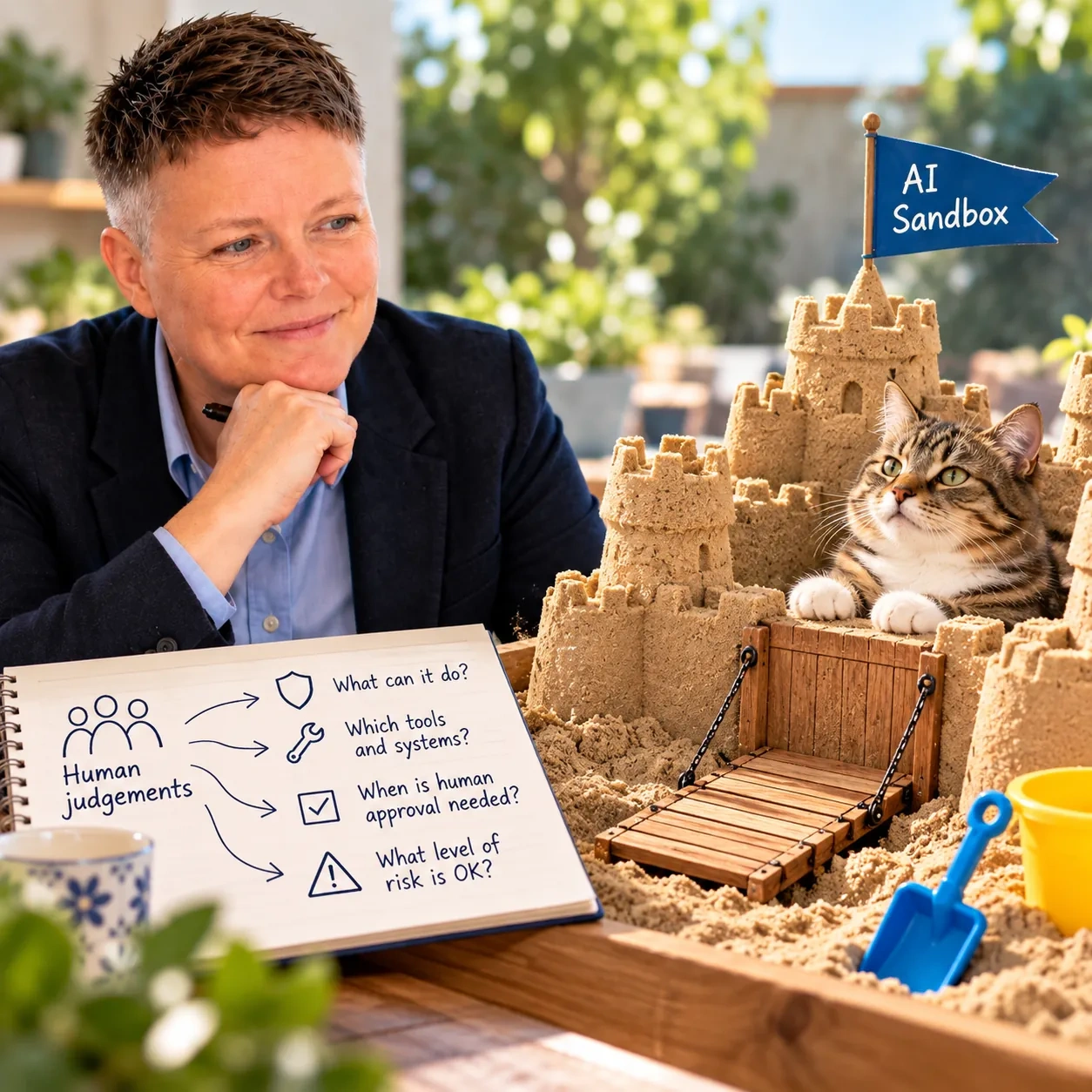
Experimentation matters. So does deciding what should leave the sandbox.

And I'm starting to think that might be the point.
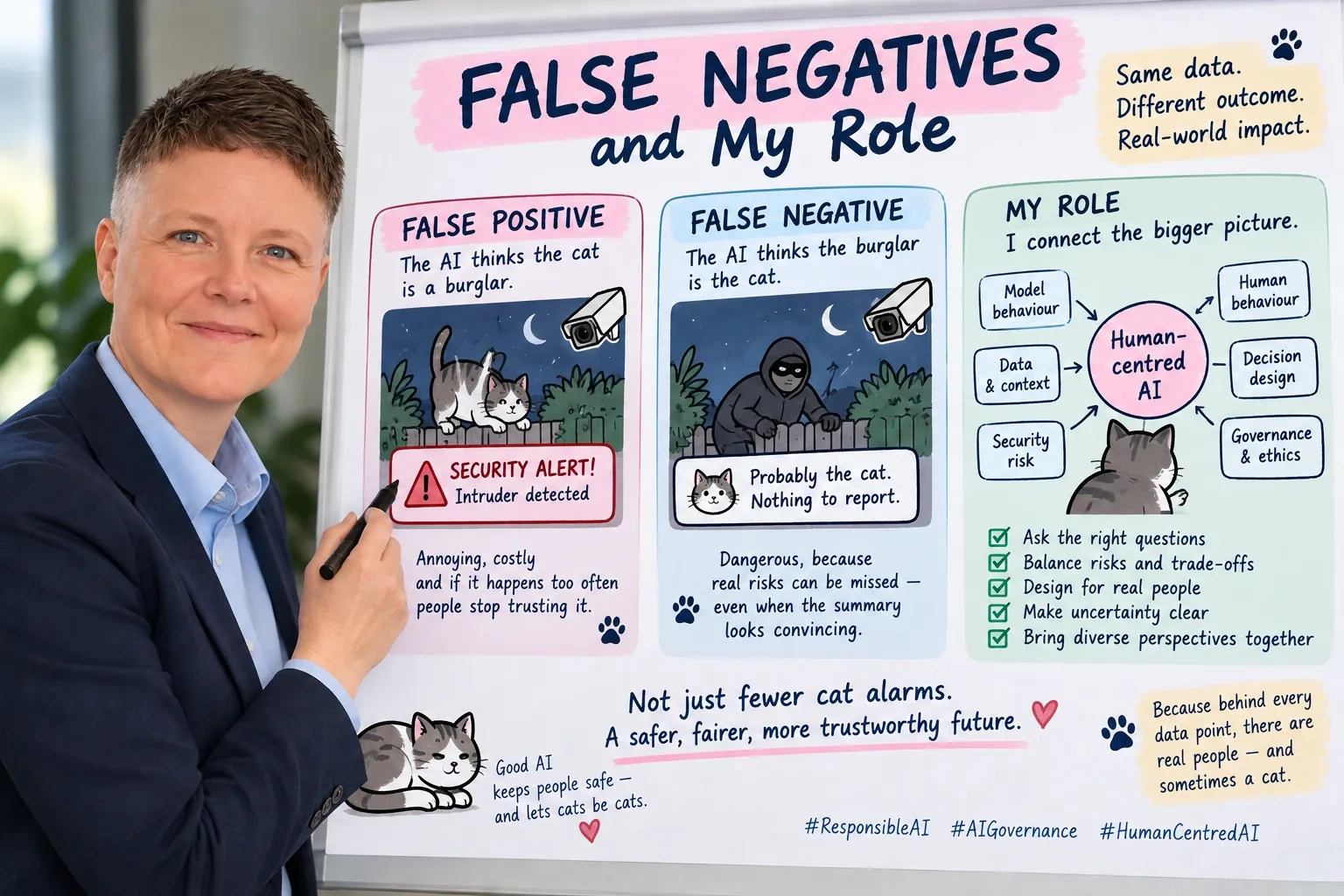
Accuracy isn't enough. We need to understand which mistakes matter.
Six notes on trust, agents, judgement and what changes when AI joins the work.
Explore all thinking →AI transformation succeeds when technology, people, workflows, learning, governance and experience start working as one system.
My role is to help organisations see that system, find where it's breaking, make possible futures tangible, and design practical pathways towards adoption.
The result isn't simply more AI. It's AI that people can understand, use, question, supervise and integrate into meaningful work.
I'm most interested in the point where the technology exists, the strategy sounds convincing, and reality gets complicated.